In this module, we will provide an introduction to the Behavioral Health Awareness series, providing foundational information and an overview of terminology you might hear in remaining modules. Behavioral health is an umbrella term that describes someone’s mental, physical, social, and spiritual health. Behavioral health also includes eating habits, level of physical activity, and substance use behaviors. It can even include the level of stress in your life. Behavioral health describes the relationship between a person’s behaviors and their overall health.
You also have the option to move freely about the module using the player menu on the left-hand side of the window. You are free to start, stop, or pause the module at any time.
- A Spanish transcript is available in the resources section of this module.
- Please be sure to disable the pop-up blocker on your browser.
In this module, we will help you recognize misconceptions you might
hold about depression, understand depression and its effects, and learn
strategies for supporting people who live with the condition. We invite you to
explore the following chapters that address questions you may have about the
topic.
You also have the option to move freely about the module using the player menu on the left-hand side of the window. You are free to start, stop, or pause the module at any time.
In this module,
we will have a candid discussion about suicide. Although this is a growing and serious
problem, there is hope. This table of contents provides an
outline for what you will learn. We invite you to explore the following
chapters that address questions you may have about the topic.
This module is
recommended for people without formal mental health training who want to
increase their awareness and knowledge of suicide, including how to help
someone experiencing a mental health crisis.
You also have the option to move freely about the module
using the player menu on the left hand side of the window. You are free to
start, stop, or pause the module at any time.
In this module, we will discuss the world of older adults who brave both the ups and the downs of aging and talk about ways to understand and support them.
You also have the option to move freely about the module using the player menu on the left-hand side of the window. You are free to start, stop, or pause the module at any time.
In this module, we will discuss how to identify if someone may have a problem with substance use, risk factors for substance use, treatment options, and supporting recovery efforts. We invite you to explore the following chapters that address questions you may have about the topic.
You also have the option to move freely
about the module using the player menu on the left-hand side of the
window. You are free to start, stop, or pause the module at any time.
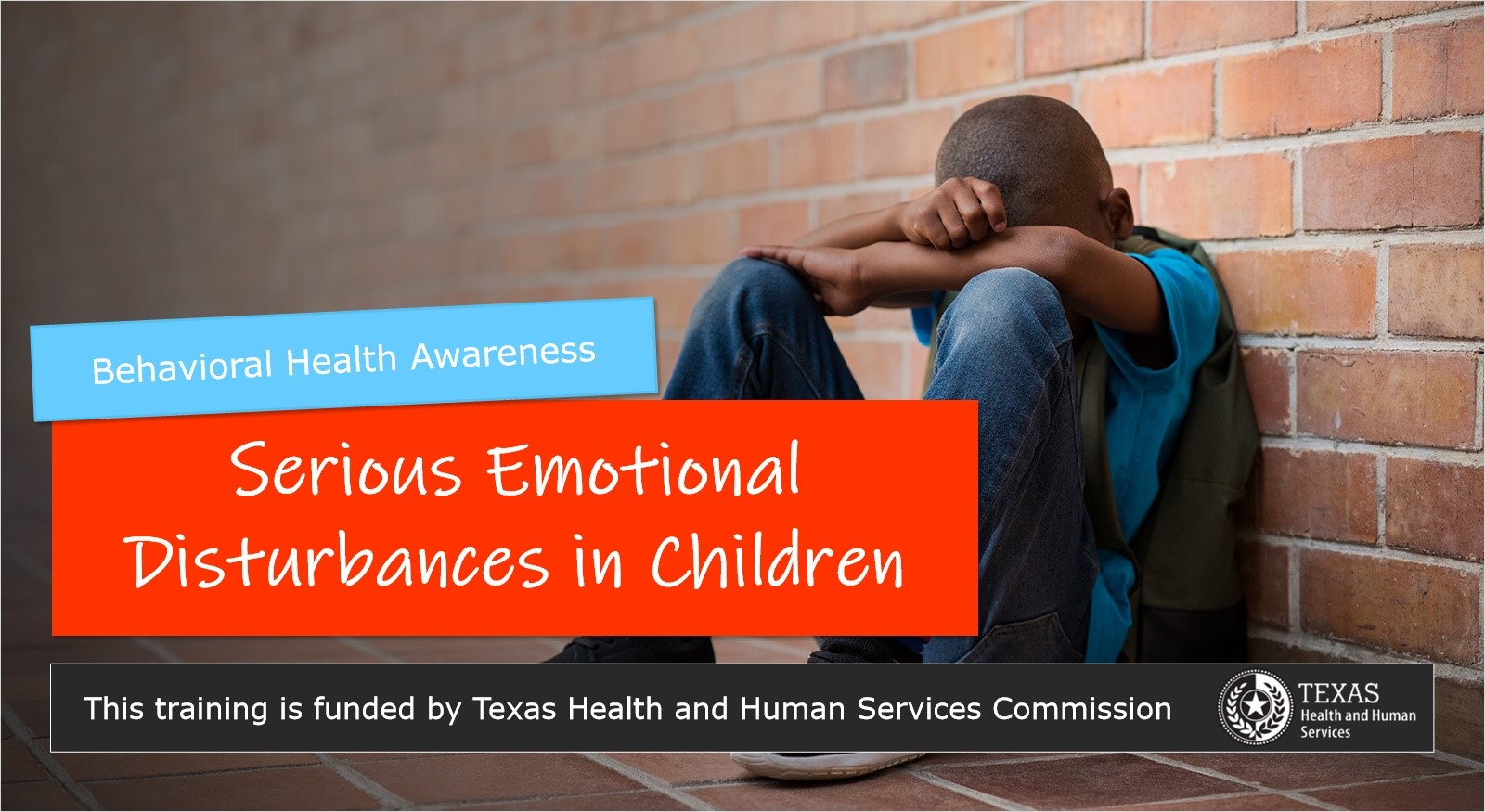
In this module,
we will discuss how to define serious emotional disturbances, how children cope
with their disturbances, and how we as caring adults can get help for a child.
We invite you to explore the following chapters that address questions you may
have about the topic.
You also have the option to move freely about the module using the player menu on the left-hand side of the window. You are free to start, stop, or pause the module at any time.
In this module, you will walk away with a better understanding of bipolar disorder and how you can help those in your life who are living with the condition.
You also have the option to move freely about the module using the player menu on the left-hand side of the window. You are free to start, stop, or pause the module at any time.
In this module, we will help you re-evaluate misconceptions about anxiety, identify common
signs and symptoms of three different anxiety conditions: generalized anxiety
disorder, social anxiety disorder, and panic disorder, recognize how having
anxiety can impact the people living with the condition and those around them
and become familiar with ways people can manage anxiety. The table of contents provides an
outline for what you will learn in this module. We invite you to explore the
following chapters that address questions you may have about the topic.
You also have the option to move freely about the module using the player menu on the left-hand side of the window. You are free to start, stop, or pause the module at any time.
In this module, we will help you understand these types of experiences, which are symptoms of psychosis. The table of contents provides an outline for what you will learn in this training. We will talk about the experience of psychosis, treatment options, and how to support those who may be living with the symptoms. We invite you to explore the following chapters that address questions you may have about the topic. You also have the option to move freely about the module using the player menu on the left-hand side of the window. You are free to start, stop, or pause the module at any time.